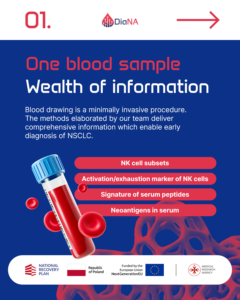
The NSCLC Diagnostics – Algorithm (DIANA) project, implemented at the International Centre for Cancer Vaccine Science (ICCVS), University of Gdańsk, under the leadership of Prof. Natalia Marek-Trzonkowska, explores whether a single blood sample can provide clinically relevant information for lung cancer diagnostics.
The project addresses one of the most pressing challenges in modern oncology. Lung cancer remains the leading cause of cancer-related deaths among both men and women, and approximately 85% of all cases are classified as non-small cell lung cancer (NSCLC). At present, fewer than 18% of patients survive five years after diagnosis.
NSCLC also poses a significant burden for healthcare systems. An estimated 3 million people are considered at risk, while effective and widely accessible screening methods are still lacking. Although low-dose computed tomography is currently used for screening, its sensitivity remains suboptimal and access to this method is limited.
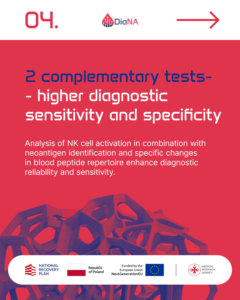
The goal of the DIANA project is to develop a novel diagnostic method for NSCLC based on the analysis of a blood sample. The approach is built on the hypothesis that different biological signals can provide complementary information about the presence of cancer. By integrating these signals, the project aims to develop a more accessible and efficient diagnostic strategy.
The DIANA solution is based on two diagnostic algorithms:
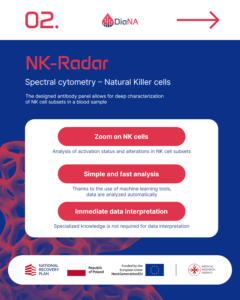
- NK-Radar, which uses information about the activation status of the patient’s immune system.
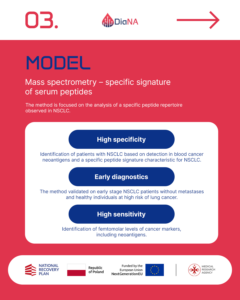
- MODEL, which identifies unique tumour characteristics, known as markers, present in the blood of cancer patients.
The information generated by these algorithms is analysed with the support of machine learning and artificial intelligence, enabling more efficient interpretation of complex biological data and supporting the development of an effective diagnostic framework.
As part of the project, Prof. Marek-Trzonkowska explains that research involves comparative analysis of blood samples from healthy individuals and patients with lung cancer, focusing on subtle differences in immune cell populations. These analyses take into account multiple biological and clinical factors, including immune cell function, age, immunological history, migration patterns, and signs of cellular stress or exhaustion, as well as the biological sex of the individual.
At the same time, the research team has identified unique NSCLC-related characteristics present on the surface of cancer cells that are released into the bloodstream. Within the DIANA project, their diagnostic relevance is being validated using approximately 2,000 samples collected by the Department and Clinic of Thoracic Surgery at the Medical University of Gdańsk.
The ultimate goal of the project is to develop a blood-based diagnostic solution that could enable earlier detection of lung cancer and improve access to modern diagnostic tools.
The expected long-term outcome of the DIANA project is to support improved quality and extension of life for cancer patients, while contributing to the development of a more effective healthcare system.
The implementation of the NSCLC Diagnostics – Algorithm (DIANA) project is supported by funding from the Medical Research Agency within the framework of the competition for scientific entities to carry out applied research in the biomedical area (2024 ABM/03/KPO) within the National Recovery and Resilience Plan, Component D Efficiency, Accessibility and Quality of the Health System, Investment D3.1.1 Comprehensive development of research in medical and health sciences.